Back to One
Starting over isn’t failure. It’s part of a creative's job

“Back to one.”
If you’ve ever been on a set, you know exactly what that means. The director has called cut. Everyone pauses for half a beat. Then the reset begins. Actors return to their marks. Camera goes back to its starting position. Sound checks levels. Someone cracks a joke to break the tension. You take a breath… and you do it again.
Not because it was bad.
But because it could be better.
That phrase has been rattling around in my head lately—especially after seeing a recent Instagram reel from producer Patrick Caligiuri about creatives starting over. Again. Not as a warning, but as a reality check. Resets aren’t a failure state. They’re part of the job description. If you haven’t seen the reel, it’s worth a watch. It doesn’t sugarcoat the moment, but it doesn’t dramatize it either. It just tells the truth.
And the truth is this: creatives don’t create because we thought we’d get rich (although that would be nice).
If we wanted predictable income, clear career paths, and performance reviews with tidy bullet points, we would have chosen different professions. Most of us just want to make a living entertaining people. Telling stories. Making things. Paying the bills. Doing it again tomorrow.
In 2019, Mark Haynes Productions (MHP) was on an upward trajectory like a lot of others were. Streaming was riding high. Buyers were buying. Meetings were plentiful. Decks were being read. The system, even deeply flawed, was at least moving.
Then you know what happened.
From 2020 through 2024, the industry absorbed a pandemic-induced shutdown, followed by a dual writers-and-actors strike that shut things down again just as we were started to regain our footing. Those events didn’t cause the longer-term contraction we’re now seeing, but pretending they weren’t contributing factors would be disingenuous. They accelerated trends that were already in motion: overexpansion during the streaming boom, rising costs, risk aversion, and an eventual correction that was probably inevitable but became far more abrupt because of prolonged work stoppages.
And before anyone misreads this: I support labor. I always have. But it’s also possible to support labor and still be honest about outcomes.
Despite all of that turbulence—global, cultural, and industry-wide—MHP kept pushing. We produced HINDSIGHT: THE DAY BEFORE, a critically acclaimed, award-nominated elevation of narrative audio starring Santiago Cabrera and John Goodman, and a prequel to one of our television properties. That didn’t happen by accident. It happened because we adapted, shifted formats, and kept building even while the ground was still shaking beneath us.
Still, momentum, no matter how hard-earned, has a shelf life in this business.
Any momentum you had—if it’s more than a year or two old and it’s not from a major hit—is expired. This business does not honor past velocity. You’re not exactly starting from square one if you’ve produced something with name talent or have a decently populated IMDb page, but the difference is stark. What used to be easy meetings becomes maybe—maybe—a callback. And it won’t be quickly, either.
So where does that leave creatives who didn’t have a chair when the music stopped—or who kept working but found the doors suddenly heavier or locked altogether?
You keep going.
You start again.
Which brings me to my own “back to one.”
For me, this reset means pivoting back to the industry where I got my start: comics.
I’ve spent more than 30 years in that business. I’ve worked in every sector of it—writing, editing, publishing, production, lettering, design, licensed work, creator-owned projects, and distribution. I know it inside and out. And more importantly, I understand the mindset of the people who stay in it.
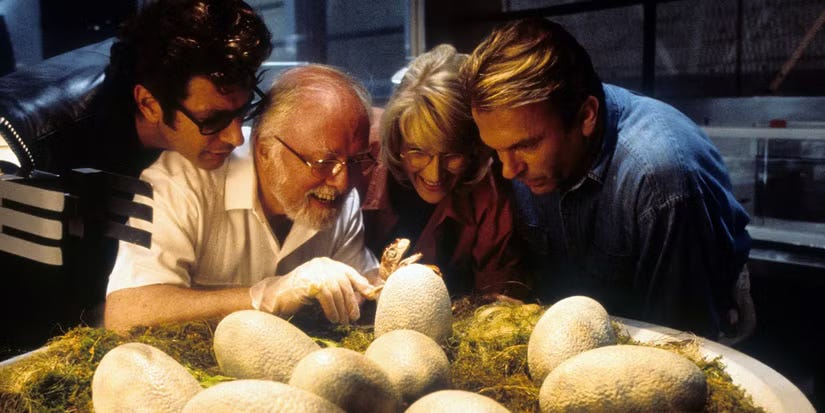
Comics is populated by creators who create because they have to. It’s not a stepping stone. It’s not a consolation prize. It’s in their blood. It’s their identity. It’s life. And like Jeff Goldblum’s Ian Malcolm famously said in the film Jurrasic Park, life finds a way. Comic creators always have and always will.
My pivot, however, is not a retreat from MHP.
It’s a prioritization.
In moments like this, the work that can earn immediately—or damn near immediately—has to move to the front of the line. That doesn’t diminish longer-term, more speculative plays. It simply acknowledges reality. You stabilize the base so the structure above it can keep standing. Comics, for me, are not a step backward; they are likely a new foundation upon which I can keep going.
Which is why the conversation around AI in comics matters so much right now.
AI is polarizing in Hollywood. In the comic book world, it’s radioactive. But the opportunity isn’t in using AI to replace creation. It’s in using it to remove friction around awareness, promotion, and access—areas creators have historically struggled with and been dependent on others to control. It’s about true and lasting creator autonomy, at least with respect to this area of the business.
Comic creator Billy Tucci has begun experimenting with AI tools to animate his signature character, Shi. Not to replace drawing. Not to replace storytelling. But to bring decades-old IP to life in new ways, on his own terms, and to potentially new audiences.
After decades of false starts with Hollywood and with the help of AI tools, maybe he no longer needs to wait for them?
Like Billy, I have no intention of using AI to create my comics. That work remains human, tactile, and deeply personal. But I absolutely intend to use it to promote awareness of them—to test formats, visualize possibilities, explore motion and reach in ways that were previously gated by money, access, or permission.
Entertainment business models are being re-engineered in real time as you read this. Creators who understand how to use new tools—without surrendering their voice or values—will have options that didn’t exist even five years ago.
So if you find yourself standing back at the beginning—again—take a breath.
You’re not erasing the work you’ve done. You’re bringing it with you. Better instincts. Better taste. Fewer illusions.
Find your mark.
Adjust the lights.
Let the camera roll.
Back to one.
And action.
Mark Haynes lives and works at the intersection of entertainment, communications, and technology. He’s developed stories for audiences and marketing technology solutions for companies for over a quarter century and he’ll do it again, too — complete with em dashes because they’re a legit part of the English language. You should hire him so he can feed his cat and pay his overdue rent. Find out more at markhaynesproductions.com, markhaynescommunications.com, or his new site, markhaynescomics.com